Klingon on the Wall, Tripped Up by Romanization | Strange Holos 2 | STARPWN 2026
🌐 中文版:繁體中文
This is the follow-up to Strange Holos 1, with the same setting and structure. Recognizing the script as Klingon wasn’t actually hard. What tripped me up was the last step: Klingon’s romanization and the letter it stands for as an English substitution cipher are two different things.
What the challenge is about
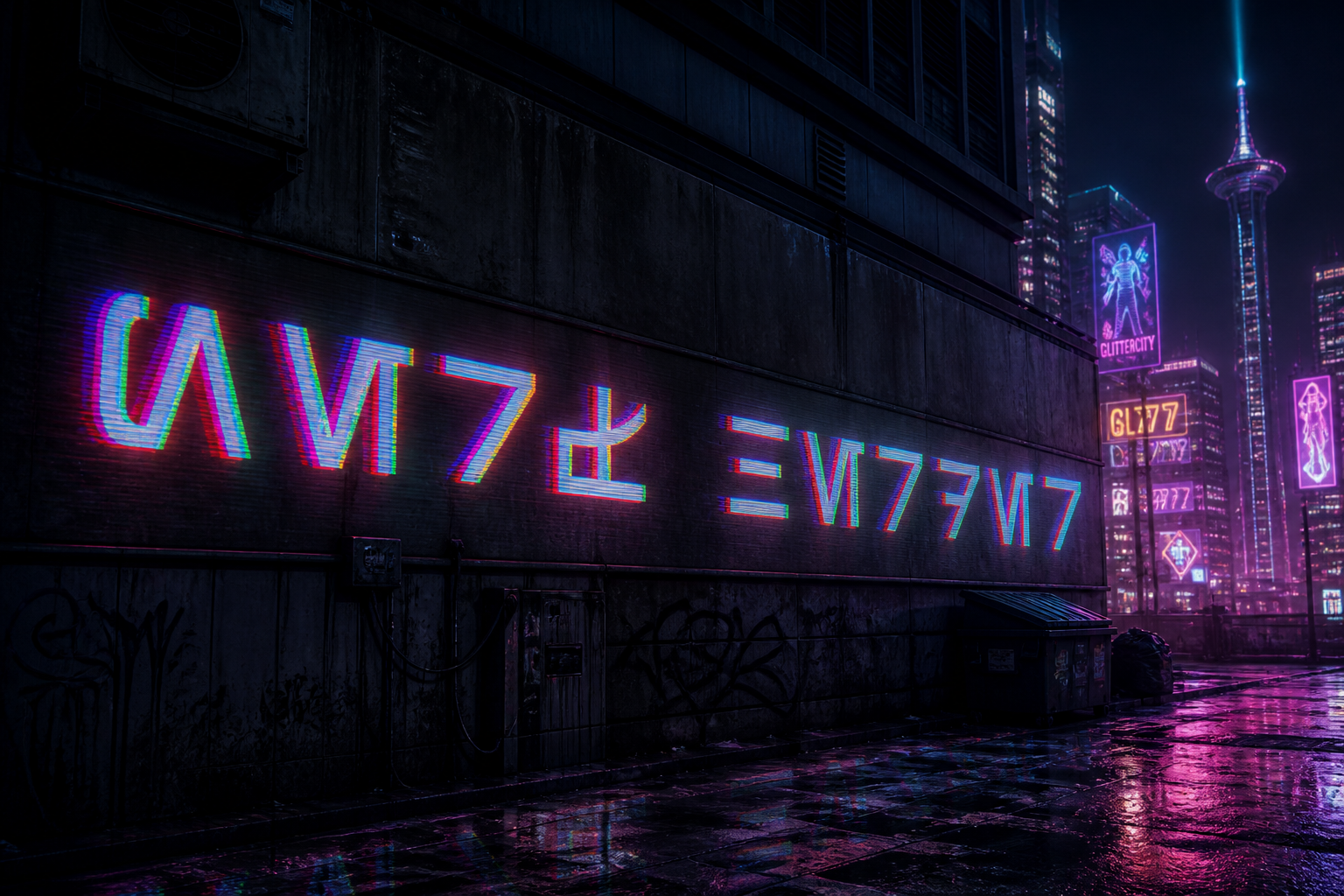
Again just one image, space2-glitter.png (1536×1024, 2.4 MB), with no other leads:
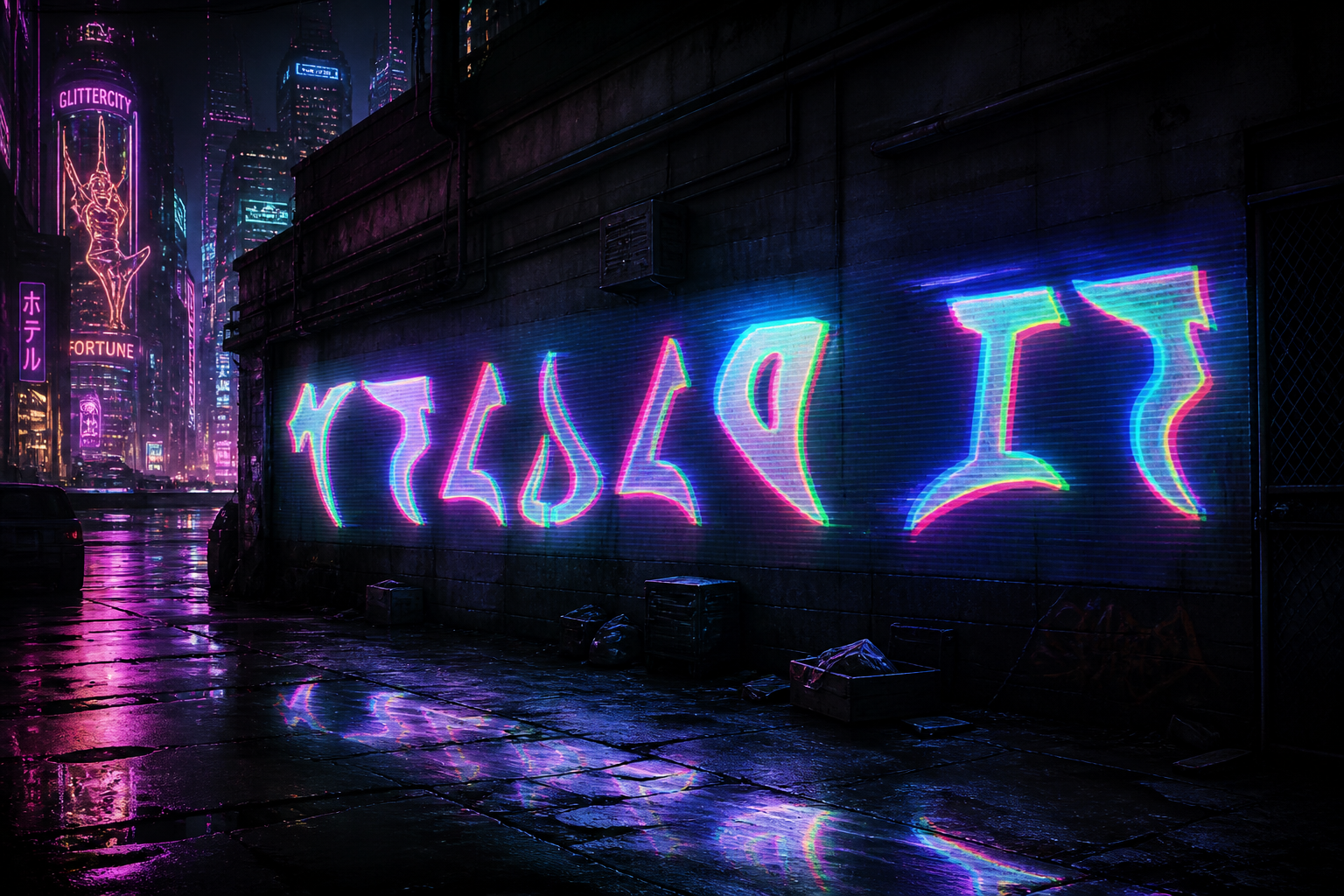
Same setup as the first one: a cyberpunk alley, a wall covered in strange neon graffiti, and background signs reading “GLITTERCITY”, “FORTUNE”, and one in Japanese saying「ホテル」(hotel).
But the writing system is completely different this time: flowing, blade-like curves with hooks and sharp points.
File-level checks
1 | pngcheck space2-glitter.png |
binwalk found no embedded data, pcrt reported all CRCs correct, and zsteg only turned up the bit-plane noise any ordinary photographic image has. The only non-standard chunk is again C2PA provenance info (gpt-image / OpenAI generation certificate plus SSL.com’s signature chain), the same conclusion already established in part 1: not a payload.
Same conclusion: the flag is in the picture, so look at the graffiti.
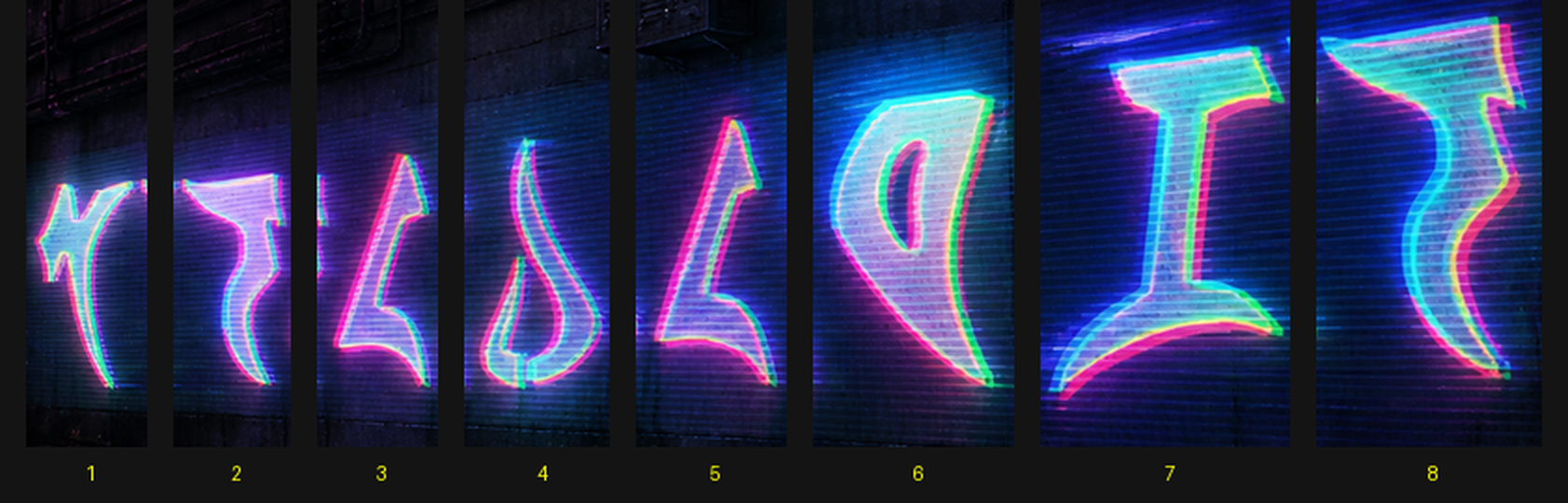
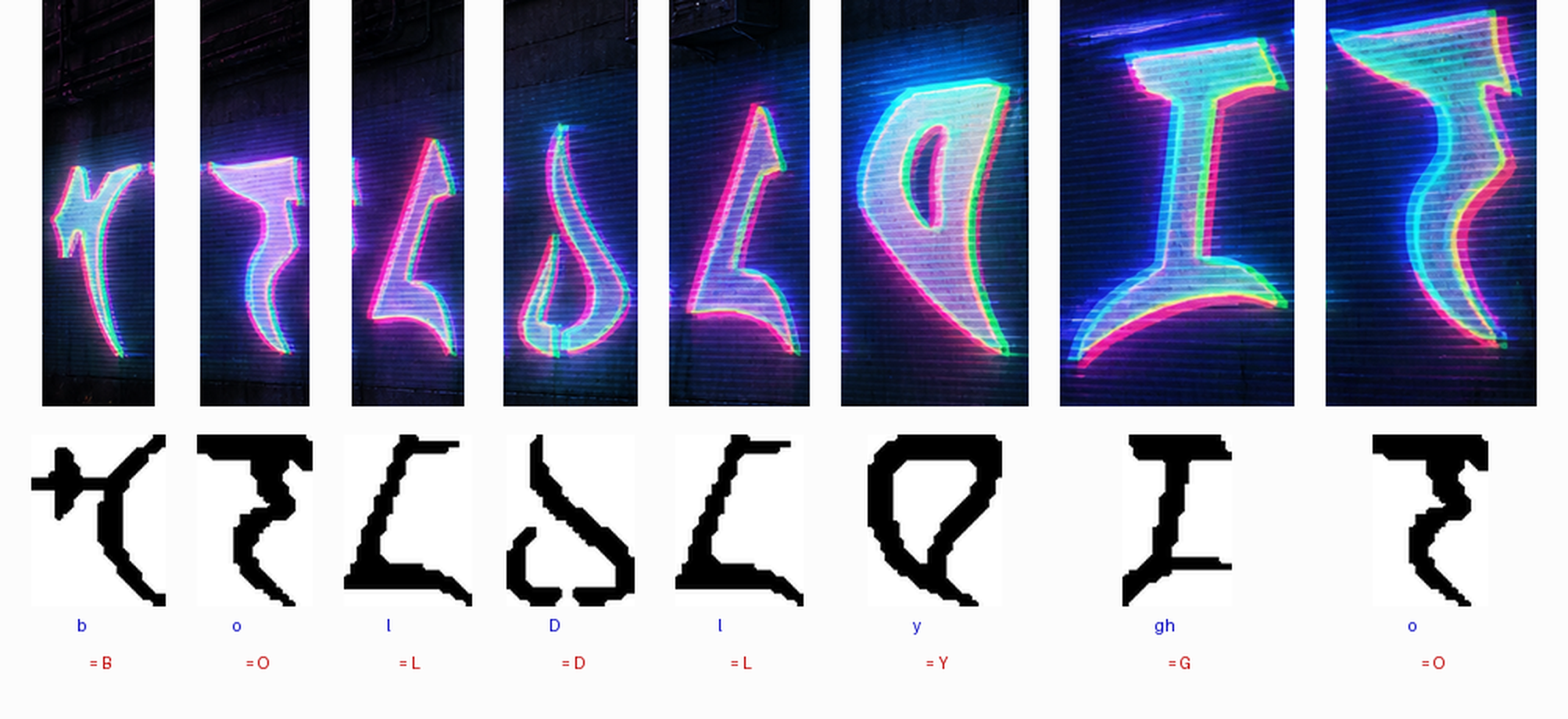
The characters this time are flowing curves, 8 of them:
Identifying the writing system
These flowing, hooked, blade-like strokes, plus one character that’s a very clean “工” shape, point to Klingon (pIqaD).
It fits thematically too. Part 1 was Star Wars Aurebesh, and the title “Strange Holos” is itself a nod to Star Trek: Strange New Worlds.
As in part 1, I pulled the official chart to compare:
1 | curl -sL -A "Mozilla/5.0" -o klingon.gif https://www.omniglot.com/images/writing/klingon.gif |
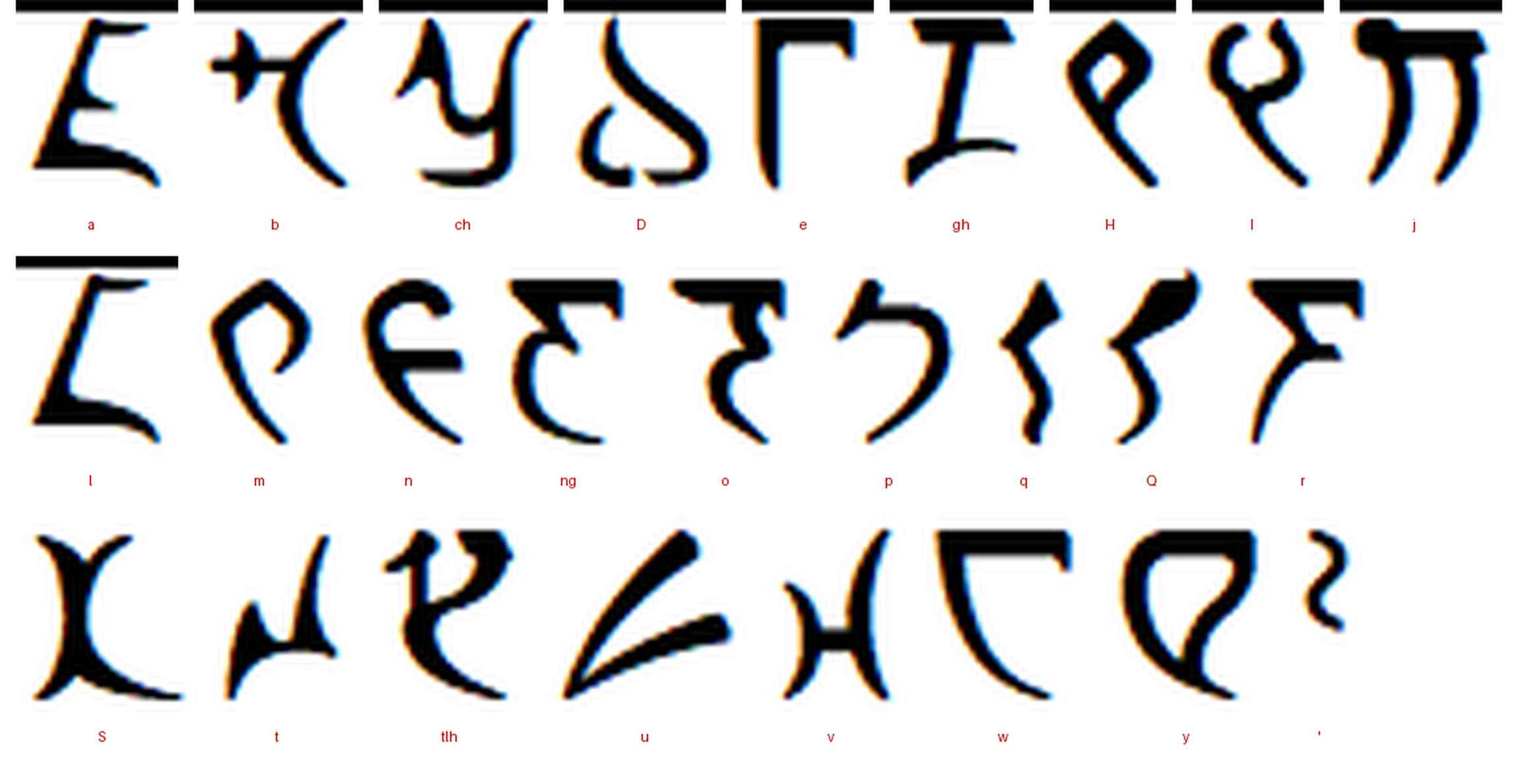
Klingon’s gh is an 工 shape, y is a bowl with an enclosed inner loop, and o is a bar plus an S-curve. All three shapes are clearly present on the wall, which confirms the writing system.
Comparing by eye gives the phrase boldly go.
This fits the Star Trek theme, from the most famous line in the series’ opening monologue: “to boldly go where no one has gone before.”
B O L D L Y: letters 3 and 5 are both LG O: the second letter is O, matching the second letter ofBOLDLY- Character 7 = G (Klingon
gh, the 工 shape) - Characters 2 and 8 = O (Klingon
o)
With the answer settled, the full mapping is clear:
| # | Klingon letter | English letter |
|---|---|---|
| 1 | b |
B |
| 2 | o |
O |
| 3 | l |
L |
| 4 | D |
D |
| 5 | l |
L |
| 6 | y |
Y |
| 7 | gh |
G |
| 8 | o |
O |
The transliteration trap
My first submission was STARPWN{boldlh gho}, and it was rejected.
The mistake was that I read the characters correctly but wrote down Klingon’s romanization rather than the English letters they represent. In Klingon romanization, gh, ch, ng, and tlh are single letters spelled with two or more characters. So that 工-shaped symbol is written gh under Klingon spelling rules, but when used as an English substitution cipher it stands for the single English letter G, making the word GO.
Flag
1 | STARPWN{boldly go} |
Lowercase with a single space, consistent with the previous challenge’s STARPWN{nerf herder} format.
Appendix: dead ends I walked down
| Idea | Result |
|---|---|
| Extra data / extra chunks | binwalk clean, pngcheck clean, only caBX (C2PA) |
| zsteg bit planes | Noise fragments only, no structure |
Reading it as an actual Klingon phrase (Qapla', nuqneH, toDSaH, etc.) |
None fit a 6+2 split with letters 3=5 identical and characters 2=8 identical |
Using Klingon romanization directly as the flag content (boldlh gho) |
Rejected, since multi-character romanizations must collapse to single English letters |
If you find my articles helpful, please support Kevin!
 Use boba to safe Kevin!